The Brass Neck Club
April fools: the real real-terms pay increases

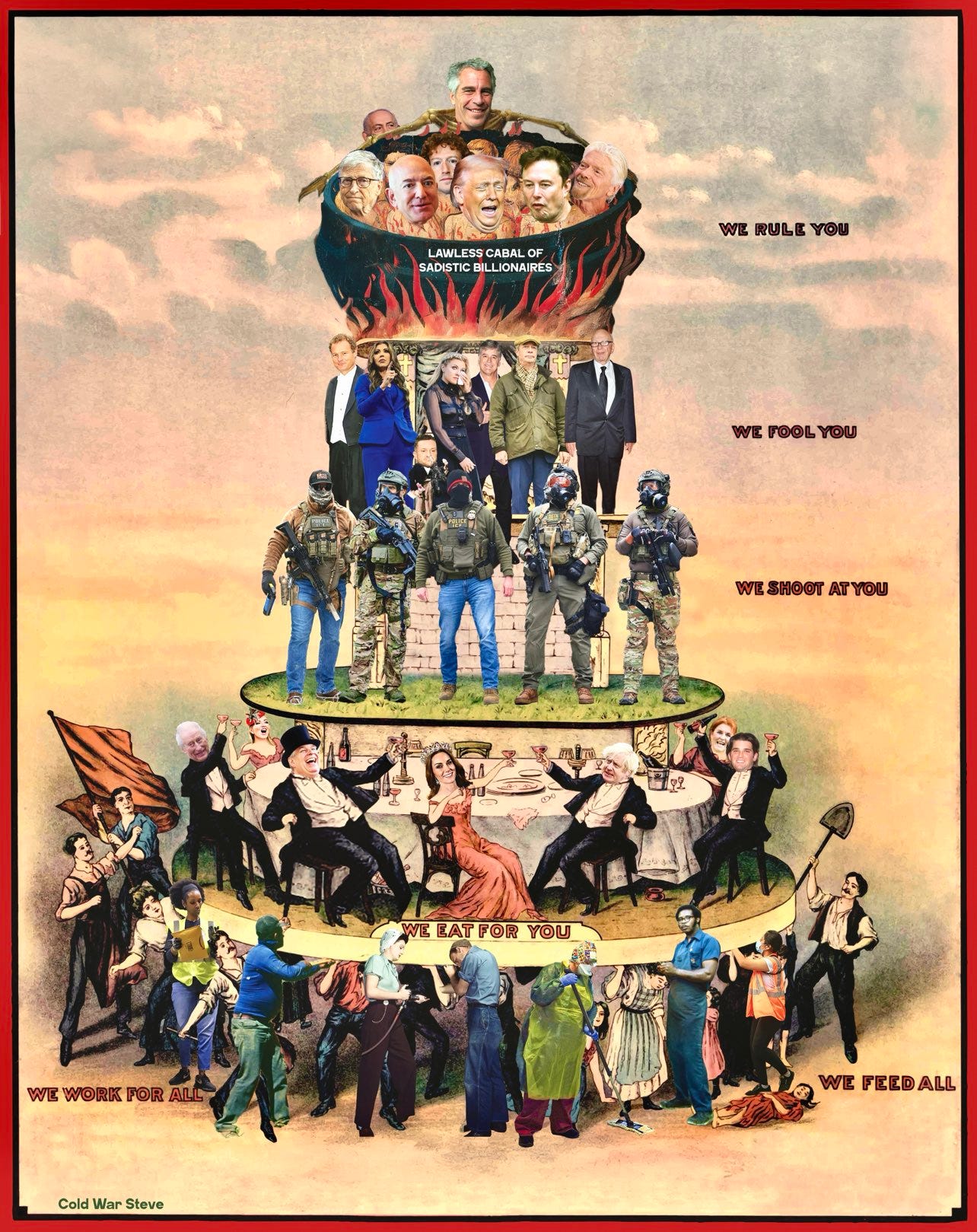
Three things happened at around the same time last month. Well, on top of * gestures wildly * everything else. The UK Government announced financial measures it claimed will support ‘working people’, including reductions in energy costs. It wrangled with doctors and the British Medical Association over pay rises. And everyone in the government – every Member of Parliament – received yet another a significant pay rise.
Which did you hear about most? Guess which of the three has received almost no attention whatsoever, aside from my own frantic and furious tweets? Do we think the timing of releasing the news about cost-of-living ‘help’ on the same day the pay rise happened, 1 April, was deliberate? Is it … kind of insulting?
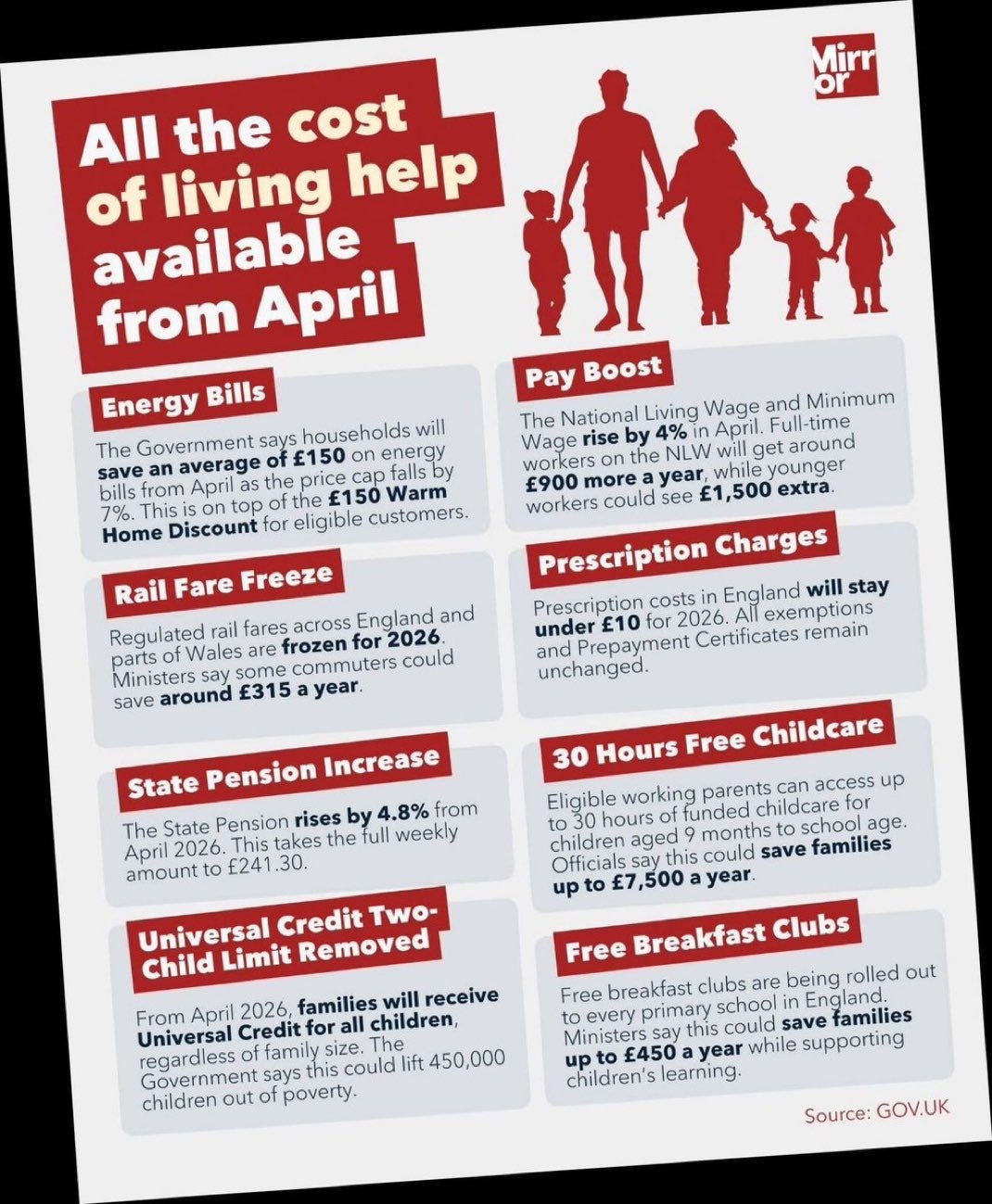
Some of this ‘help’ is illusory, or adds up to very little. For example, £150 off your energy bill works out at £2.88 a week. People in the UK pay some of the highest electricity costs in the world but the root causes of this are never tackled. Such a small decrease is like throwing pebbles at a tsunami – hardly ‘cost of living help’. It’ll buy you one tin of soup. And the tin is smaller than you remember.
We see how much more food costs compared to a year or even a few months ago, while always shrinking, and worsening. We’re paying ever more to receive ever less of ever-lower quality and shorter shelf-life. Take butter as one example. Throughout living memory it’s been sold in quantities of half a pound (250g); anyone who bakes regularly can judge its weight pretty accurately by eye. There are now 200g blocks. No fanfare, not really cheaper, just sneaky shrinkflation. They’re all it: Anchor or Lurpak or whoever does it and the rest follow suit.
The cost of a first-class stamp just rose to £1.80. It was 64p in 2016, so has nearly tripled in under a decade. In the early 1990s, when I worked for Royal Mail Brighton, I seem to remember it being 25p; 18p for second class. It could even have been less than that. And there was pressure on us to ensure that ‘first class’ was synonymous with ‘next day delivery’ whenever possible. You’re lucky to see post within a week nowadays. Second-class deliveries also face shrinkflation.
In multiple ways, privatisation is theft.

The RAC said UK petrol and diesel prices saw their biggest-ever monthly jump in March 2026, with petrol up by 20p and diesel 40p. This can of course be attributed to Israeli and USA attacks on Iran – though charges to the consumer are unlikely to go down even if everything returns to ‘normal’. Do they ever?
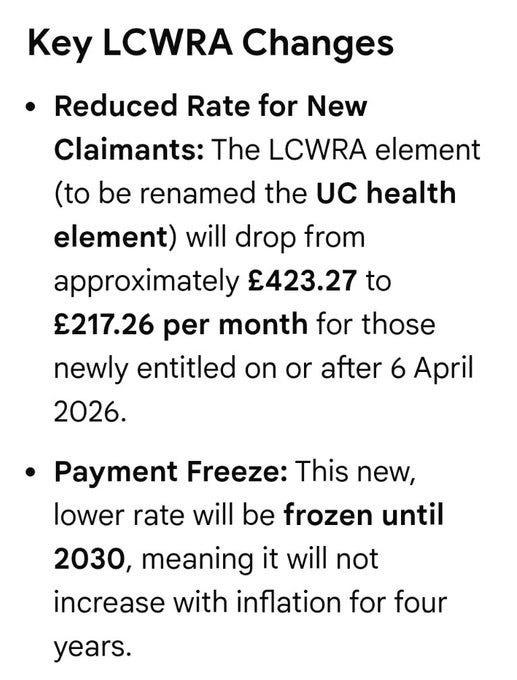
For all that Universal Credit had an uplift of 6%, so too did many rents increase at the start of the new tax year. And disability benefit cuts will make many people truly destitute. Some will die, due purely to political choices; the decisions made about the taxes you pay will kill people. The government surely knows this, which puts them into social murder and crimes against humanity territory. But they’ve gone ahead anyway, because apparently nothing matters anymore.
Labour bragged, “From today, the two child limit is lifted. That means 450,000 children will no longer grow up in poverty.” But increasing numbers of those children will be disabled when they turn 18 thanks to repeated Covid infections – something the government resolutely ignores – in addition to those disabled from birth or in other ways. How will they and their families fare then?
The government claims that helping people with the cost of living (aka profiteering) crisis is its top priority. Explain to me like I’m five how cutting the benefits of the most vulnerable people (and, indirectly, the army of unpaid carers holding up our society with very little support) by half and more helps them?
“It’s easy to see why a lot of MPs don’t understand how hard things in the country are right now. This place is a bubble. And there just aren’t enough of us here who get it; who come from working-class backgrounds, who’ve had ordinary jobs like me.
The fact is, most people are struggling right now, finding it harder and harder to pay the bills each month, to buy the same things we usually buy at the supermarket, to get the kids new shoes every time they have a growth spurt.”
Then there are the doctor’s strikes. The starting hourly rate for a resident doctor is £19 without overtime, £22 with overtime. I earned more than that as a self-taught remote proofreader, pre-AI. The rate the government insists on pays resident doctors less money in real terms (accounting for inflation) than in 2008. It sounds a large figure – which is why Wes Streeting uses it, of course, while calling doctors “moaning minnies” and “juvenile delinquents”, the vicious, disrespectful termagant – but 29.8% of very little is still very little, Wesley.
During ‘negotiations’ the government chose to weaponise desperately needed training places, despite a self-inflicted health service workforce emergency. This of course not only betrayed people who have dedicated years and mountains of effort and money to medical education, but also the health and safety of patients.
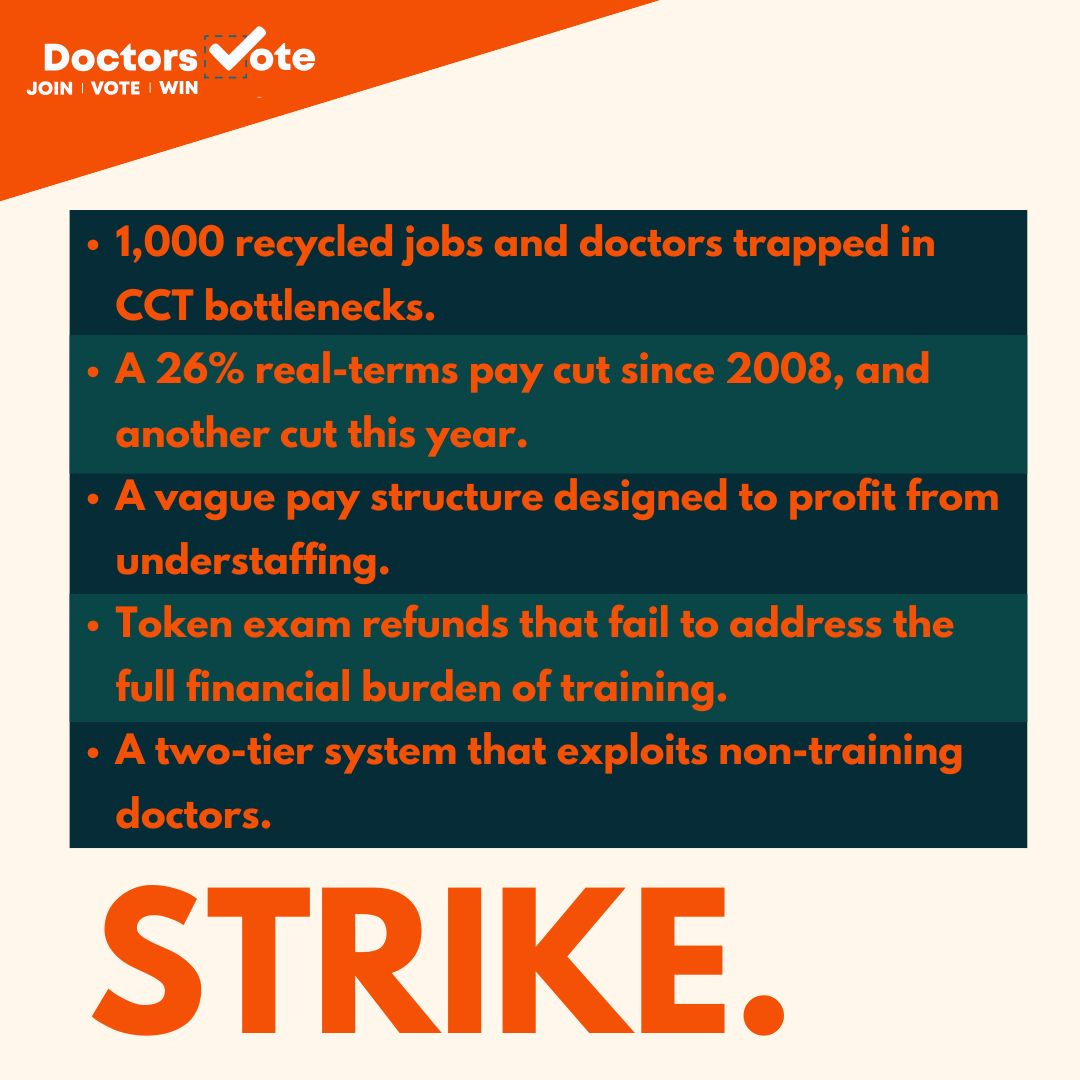
The UK is already ‘under-doctored’ compared to other OECD countries. In 2025 there were around 40,000 applicants for only 10,000 speciality training positions. Is it not staggering and appalling that so many qualified doctors, who are ready to progress, to train and to treat patients, are turned away year after year?
That the government thinks it appropriate to hold such training hostage against fair pay, in those or any circumstances, so that both doctors and the public will pay – likely in deaths, among other things – would be deeply troubling to me if I hadn’t watched it deny, while supporting, genocide and land theft. And the way Brummie bin collectors’ strikes and pay have been handled. And and and and.
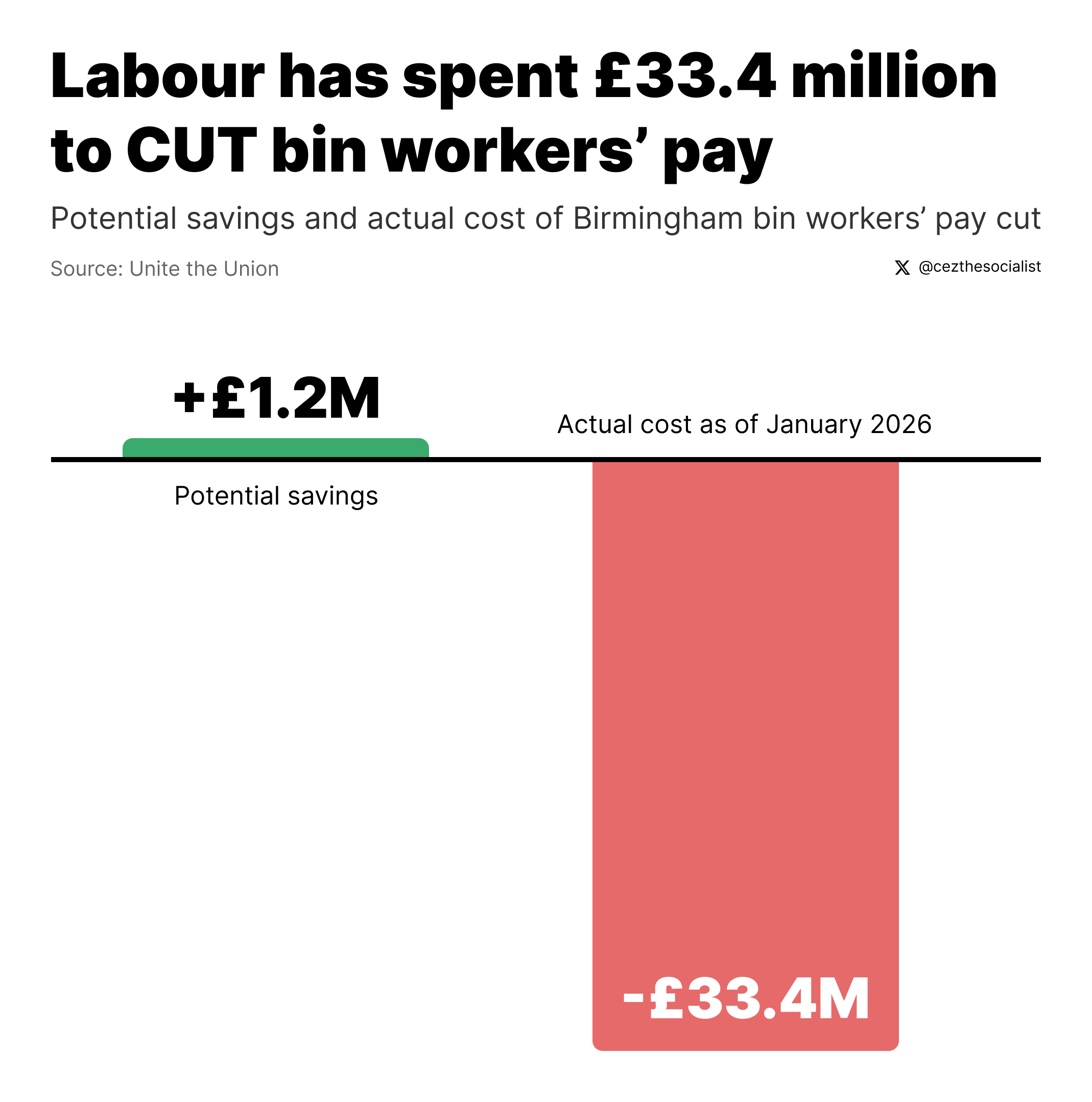
While all that was going on, guess who quietly got a substantial raise, and will get even more money over the next few years?
April fools!
Us. That’s us. For putting up with it. But I don’t blame us, as most of us aren‘t even aware. And that’s no accident. So I’m here to let you know, or remind you.
Here’s what they get this time, and remember this is on top of expenses including but not limited to rents, utilities, and the subsidised (by you) Pestminster food and drink that’s periodically a topic of public discourse but never for long or for the best. (I wrote about it for Byline Times years ago, and despair of it ever changing).
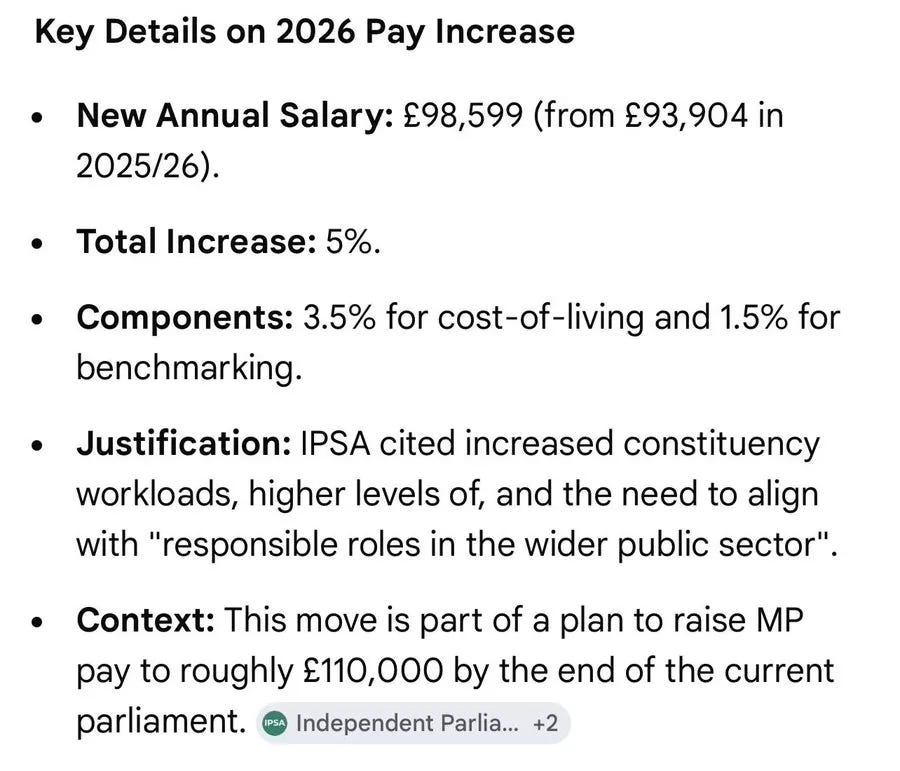
When it comes to ‘help with the cost of living’, only a handful of very privileged people truly benefit from index-linked adjustments that allow them to keep up and even treat themselves – though this doesn’t stop them taking second, third, tenth jobs. Not doctors and nurses, or any of those we identified earlier in this ongoing pandemic as the most essential workers. Not disabled and long-term sick people or their carers, who are most in need of support, and whose ranks most of us will join. Not them, not us, but our ‘representatives’. Our ‘peers’.
And to add injury to insult to injury, we pay for this inequality. Repeatedly.
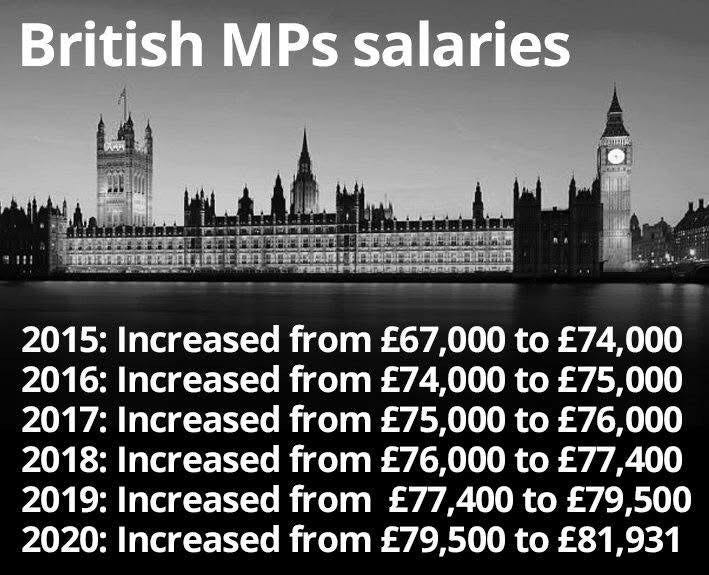
I’m not of course suggesting that MPs – or peers – shouldn’t be fairly compensated for their work. But it reminds me very much of the US Congress. That country famously has a for-profit ‘health’ system, in which feral capitalists make decisions regarding insurance payouts being approved or declined, and people stay for years in a job that makes them miserable or worse because it comes with health insurance and ‘dental’. They’re charged insane prices, when they can access care at all. Members of Congress, on the other hand, benefit from generous health insurance and other support, ponied up by constituents (despite becoming mysteriously ever-more wealthy considering what they’re paid).
I don’t begrudge anyone a genuine ‘living’ wage, regardless of their character. What I deeply resent is living in an economy arranged in such a way that the people on the sharp end of it, more of them daily, are also blamed for the impacts:
People can’t afford rent even when able to find and keep work.
Wages are so low in relation to costs that they must be topped up by benefits.
Millions of people rely on food banks, even when able to work.
The food they can afford to buy is increasingly eating them up.
Many households struggle to afford or are in debt for basic utilities.
This is the domestic abuse dynamic called DARVO, Deny And Reverse Victim and Offender, writ large. The same people we fund to have a level of comfort and security many of us will never have then punish us for not being ‘hard-working’.
When it comes to their own pay-rises, MPs themselves do not decide when, how often, or how much, which is probably just as well. The Independent Parliamentary Standards Authority (IPSA) is responsible for that, and arrangements for other allowances such as their expenses. But it is in MPs power, or perhaps we should say in their gift, to ensure the rest of us get to have the stability they do for as long as they’re in power.
Yet they, minting it in comparison to so many of us, never, ever do, do they? They will always say there are ‘other considerations’. They’re right, but why should we be subject to peaks and troughs, tossed about in the stormy boat of the economy, when they never are? How can they justify this? Let alone blame and further disadvantage us through the increasingly punitive benefits system we fund?